Decor
Macrame, Ceramic Vases & Texture: The Boho Decor Edit Explained
The boho decor edit is built on three textures: macrame, ceramic, and natural fiber. Here is what each one does, how to combine them, and the one rule that keeps it from looking cluttered.
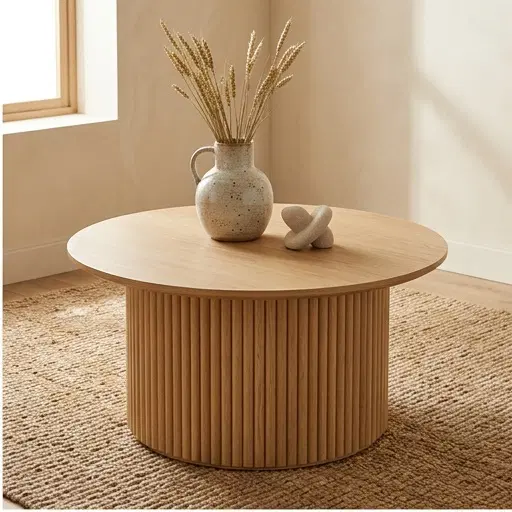
Walk into any well-styled boho room and you will find the same three textures doing the heavy lifting: macrame, hand-thrown ceramic, and natural fiber. Understanding what each one does is the difference between a layered room and a cluttered one.
What is the boho decor edit?
The boho decor edit is a curated set of natural, handmade textures — primarily macrame, ceramic vases, and natural-fiber textiles — layered over a warm neutral base. Each texture plays a specific role: macrame adds softness, ceramic adds weight and craft, and natural fiber grounds the room.
1. Macrame — the soft layer
Macrame is knotted cotton or jute, used as wall hangings, table runners, and plant hangers. Its job is to add handmade softness and movement to surfaces that would otherwise be flat. Use it where you want warmth without color: a runner on a dining table, a small hanging on a blank wall.
2. Ceramic vases — the craft layer
Hand-thrown ceramic vases in cream, sand, and terracotta add weight, imperfection, and a sense of the maker's hand. Group three vases of varying heights on a shelf or console — the variation in glaze and form is what reads as collected rather than bought as a set.
3. Natural fiber — the grounding layer
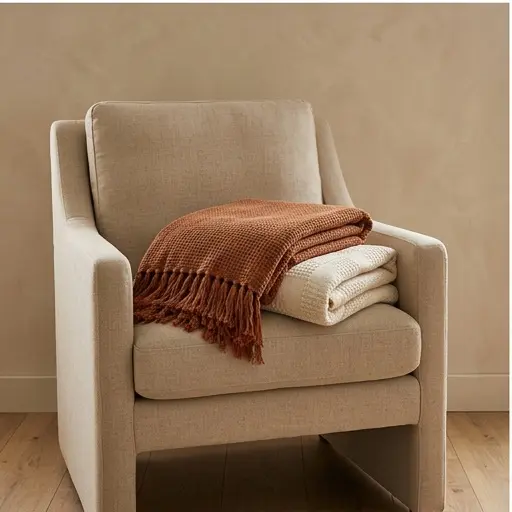
Jute, rattan, and wool rugs and baskets ground the room in nature. A natural-fiber rug under the seating anchors the whole arrangement; a woven basket holds a throw and adds another texture at floor level. This layer stops a boho room from floating.
The one rule that prevents clutter
Repeat each texture at least twice around the room. If macrame appears only on the wall and nowhere else, it reads as an afterthought. Repeat the macrame in a runner, repeat the ceramic across two surfaces, repeat the jute in a rug and a basket. Repetition is what makes three textures feel like a designed edit rather than three random objects.
How to combine the three
- Start with a natural-fiber rug to ground the room.
- Add a macrame runner or wall hanging for softness.
- Group three ceramic vases of varying heights on a surface.
- Repeat each texture once more elsewhere in the room.
Key takeaways
- Macrame adds softness, ceramic adds craft and weight, natural fiber grounds the room.
- Group ceramic vases in varying heights for a collected look.
- Repeat each texture at least twice so the edit feels designed, not random.
Frequently asked questions
What is the boho decor edit?
The boho decor edit is a curated set of natural, handmade textures — mainly macrame, ceramic vases, and natural-fiber textiles — layered over a warm neutral base. Macrame adds softness, ceramic adds craft, and natural fiber grounds the room.
How do I decorate with macrame without it looking cluttered?
Use macrame as a soft layer on otherwise flat surfaces — a table runner or a small wall hanging — and repeat the texture at least once more in the room. Repetition makes macrame feel intentional rather than like a random addition.
How do I style ceramic vases in a boho room?
Group three hand-thrown ceramic vases of varying heights on a shelf or console in cream, sand, or terracotta tones. The variation in glaze and form reads as collected over time rather than bought as a matching set.
"I bought the modular sectional for a 500-square-foot apartment and it genuinely made the room feel bigger. The reconfiguration took ten minutes — no tools."
The slow living letter
Loved this guide?
Get the next one — plus a weekly curated find — straight to your inbox.
Join 12,400+ readers. Unsubscribe anytime — we keep it slow.