Modular living
Modular Furniture: A Beginner's Guide to Flexible Living
Modular furniture is built to move with you. This beginner's guide explains what it is, why it matters, and how to start a modular home without replacing everything at once.
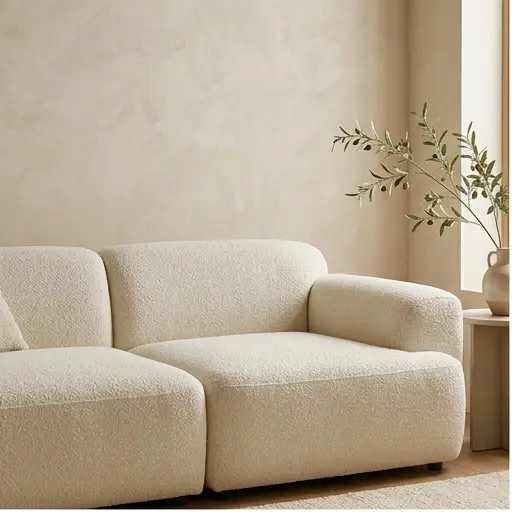
If you have ever moved a couch up a narrow staircase, wished for one more seat at a dinner party, or outgrown a sofa after a new baby, you already understand the case for modular furniture. It is built to change — not to be replaced.
What is modular furniture?
Modular furniture is made of independent, standardized pieces (modules) that connect, stack, or rearrange into different configurations. A modular sofa might be a corner unit plus armless chairs plus an ottoman; modular shelving is a set of cubes you can stack vertically or run horizontally. The defining trait is that each piece works alone and as part of a larger whole.
Why modular furniture matters
Traditional furniture is fixed: one shape, one room, one layout. Modular furniture adapts. The same sectional becomes a loveseat for two, a U-shape for movie night, or separate chairs for a gathering. You buy once and reconfigure for years — which is both more sustainable and more economical.
The four categories to know
- Modular seating — sectionals and sofas built from connectable chairs, corners, and ottomans.
- Modular storage — closet organizers, cube shelving, and drawer units that expand as needed.
- Modular tables — nesting tables and lift-top pieces that change shape or height.
- Modular beds — sofa beds and daybeds that convert between seating and sleeping.
How to start without replacing everything
Begin with the piece that causes the most friction in your home. For most people that is the sofa. Replace it with a modular sectional, then add a modular storage unit next, and a convertible sofa bed last. You do not need to convert the whole home at once — modularity rewards a gradual, considered approach.
What to look for when buying
- Connector hardware — look for hidden brackets that lock modules securely.
- Removable covers — washable or replaceable covers extend the life of the piece.
- Individual availability — confirm you can buy a single module later, not just a set.
- Neutral, durable upholstery — a piece you will keep for years should not be trendy.
Key takeaways
- Modular furniture is built from independent pieces that connect and rearrange.
- It adapts to moving, growing families, and changing rooms — buy once, reconfigure for years.
- Start with the most frustrating piece in your home rather than replacing everything.
Frequently asked questions
What is modular furniture?
Modular furniture is made of independent, standardized pieces that connect, stack, or rearrange into different configurations. Each module works alone and as part of a larger whole, so the furniture adapts rather than being replaced.
Is modular furniture worth it?
Yes. Modular furniture is worth it because one purchase can be reconfigured for years — as a sectional, separate chairs, or an expanded sofa — which is more sustainable and economical than replacing fixed furniture when your needs change.
How do I start buying modular furniture?
Start with the piece that causes the most friction in your home, usually the sofa. Replace it with a modular sectional, then add modular storage and a convertible sofa bed over time rather than converting everything at once.
"I bought the modular sectional for a 500-square-foot apartment and it genuinely made the room feel bigger. The reconfiguration took ten minutes — no tools."
The slow living letter
Loved this guide?
Get the next one — plus a weekly curated find — straight to your inbox.
Join 12,400+ readers. Unsubscribe anytime — we keep it slow.