Modular living
How to Style a Modular Sectional Sofa in a Small Apartment
A modular sectional can actually make a small apartment feel bigger — if you place it right. Here is the exact layout, rug, and styling formula designers use.
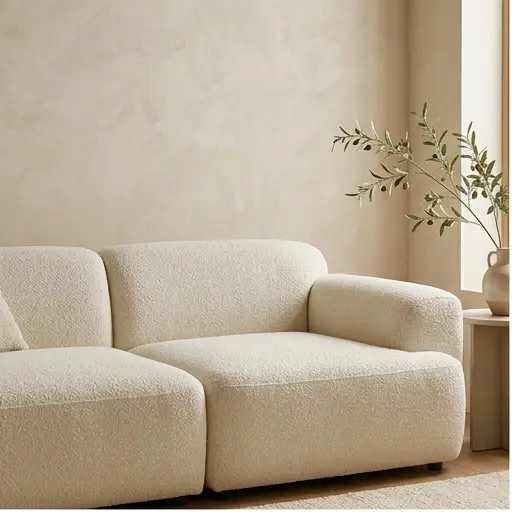
A modular sectional is the single most flexible piece you can put in a small apartment. Because each module is independent, the same sofa can be an L-shape one year and two separate loveseats the next — no new purchase required. The trick is treating it as a system rather than a single bulky object.
What is a modular sectional sofa?
A modular sectional is a sofa built from separate, interlocking modules — usually a corner seat, armless chairs, and an ottoman — that connect with hidden brackets. Unlike a fixed L-shaped sectional, you can reconfigure, split, or expand the pieces as your room or life changes.
1. Anchor the sectional to the longest wall — or float it
In a small apartment you have two good options. If your longest uninterrupted wall is at least 8 feet, push the sectional against it and leave the opposite side open for traffic. If your room is square, float the sectional away from the wall and let the back define a "room within a room." Floating a low-back sectional visually opens the space far more than squeezing it into a corner.
2. Size the rug to the seating, not the room
The most common small-space mistake is a rug that stops under the front legs of the sofa. Choose a rug large enough that all front feet of the sectional sit on it, with at least 6 inches of rug extending past each end. This visually expands the floor and stops the sofa from feeling stranded.
3. Keep the back low and the base light
A low-profile back (under 32 inches) preserves sightlines to windows and walls, which reads as more square footage. Pair it with a base raised on legs rather than a skirted frame — visible floor space underneath is one of the oldest small-space illusions in design.
4. Use the ottoman module as a coffee table
Swap a bulky coffee table for the sectional's ottoman module topped with a wooden tray. You gain a footrest, extra seating for guests, and a surface for a drink — three functions in the footprint of one.
5. Repeat one texture across the room
Pull the bouclé or linen of the sectional into a throw pillow, a floor cushion, or a small accent chair across the room. Repeating a single texture ties the layout together so the sectional reads as intentional rather than dominant.
Key takeaways
- Float a low-back sectional to define zones in an open-plan apartment.
- Size the rug so every front foot of the sofa sits on it.
- Use the ottoman module as a tray-topped coffee table to save floor space.
- Repeat one texture across the room to unify the layout.
Frequently asked questions
Can a sectional sofa work in a small apartment?
Yes. A modular sectional works well in a small apartment when you choose a low-back profile, float it to define a zone, and size the rug so all front feet sit on it. Modular pieces can be reconfigured or split into separate seats as needs change.
What size sectional fits a small living room?
For a living room under 150 square feet, keep the longest side of the sectional under 90 inches and choose an armless chair plus corner plus ottoman configuration. Leave at least 18 inches of clearance for walkways.
Should a sectional go against the wall or float in the room?
Either works. Against the longest wall maximizes floor space; floating a low-back sectional defines a zone and preserves sightlines, which makes a small apartment feel larger.
"I bought the modular sectional for a 500-square-foot apartment and it genuinely made the room feel bigger. The reconfiguration took ten minutes — no tools."
The slow living letter
Loved this guide?
Get the next one — plus a weekly curated find — straight to your inbox.
Join 12,400+ readers. Unsubscribe anytime — we keep it slow.